News
Zeeshan Ali Pakistan's First Son in Orbit
A New Chapter Written in the Stars

A (Source: Ak)

B
(Source: Ak)
(Source: Ak)
A New Chapter Written in the Stars
By: For Every Pakistani Who Ever Looked Up at the Sky.
There are moments in a nation's life that divide history into "before" and "after." November 25, 2026, is one of those moments for Pakistan.
At 5:18 AM Pakistan time, when most of the country was still asleep, a Long March-2F rocket roared into the sky from the Jiuquan Satellite Launch Centre in northwest China. On board was not just a crew of three. On board was the dream of 240 million Pakistanis.
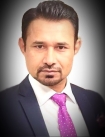
On board was *Muhammad Zeeshan Ali.
Pakistan's first astronaut, the first Pakistani ever in orbit, and the first foreign astronaut ever to visit China's Tiangong space station.
This was not a joyride. This was not symbolism. This was history.
" I'm Not Flying For Myself"
A day before the launch, Zeeshan Ali stood before the world's media and said a line that will be remembered for generations:
I'm not flying for myself.
I carry the name of Pakistan on my shoulder.
That one sentence tells you everything about the man. He is a 40-year-old pilot, a professional who earned his place not through connections, but through three rounds of ruthless screening and assessment, and then months of gruelling training in China.

C
Source: Ak
Source: Ak

D
Source: Ak
Source: Ak

E
Source: Ak
Source: Ak
He and his backup, Khurram Dawood, were selected from the best Pakistan had to offer. Ali was chosen to fly. Dawood stayed on the ground to support him. Both are heroes. But on November 25, it was Ali who carried the flag.
He did not just learn how to survive in space. He spent seven months in Beijing, learning Chinese language, Chinese songs, and even reading Chinese poetry, to be able to live and work as a true crewmate, not a guest.
That is dedication. That is the Pakistani spirit at its best.
A Real Mission, With Real Science.
Zeeshan Ali is flying as a
Payload Specialist* alongside Chinese Commander
Tang Hongbo, and Flight Engineer Wu Yi.
His job is not to sit and wave. He will spend 5 to 10 days on Tiangong, installing experimental samples, operating research equipment, and carrying out scheduled experiments.
And here is the part that critics miss: This science is "Pakistani science".
Four Pakistani biotechnology experiments, selected from more than 300 proposals submitted by universities across Pakistan to SUPARCO, are going up with him. The research focuses on areas that matter to every ordinary Pakistani.
food security and climate change.
When Zeeshan Ali conducts those experiments in microgravity, he is not doing it for China. He is doing it for the Pakistani farmer whose crop fails due to changing weather, for the Pakistani student who dreams of a lab, for the Pakistani child who will one day eat food grown from seeds tested in space.

Zeeshan Ali
Source: Ak
Source: Ak
Here is the answer,
1. For Our Children:* Tonight, millions of Pakistani children will look at the sky and think, "If Zeeshan Ali can go there, why can't I?" No textbook, no motivational speech can do what one real hero in orbit can do. He has made science cool, made ambition possible, made Pakistan proud.
2. For Our Science:* SUPARCO, our universities, our young researchers now have a direct link to a working space station. The data from those four experiments will come back to Pakistan. The training, the knowledge, the protocols.
all of it stays with us.
3. For Our Standing in the World:
The whole world watched Reuters, BBC, CNN, and every major outlet carry the headline: "Pakistani astronaut in space." For one day, Pakistan was not in the news for problems. Pakistan was in the news for achievement. That is soft power that money cannot buy.
4. For Our Future:* This is not the end. This is the beginning. The agreement with China opens the door for more Pakistani astronauts, more joint missions, and one day, a Pakistani role in lunar exploration. China is planning a crewed mission to the Moon and eventually Mars. Because Zeeshan Ali went first, Pakistan will be in that conversation.

Aurangzeb Akbar / Investigative Journalist London
Source: Ak
Source: Ak
more information: https://aurangzeb
Liability for this article lies with the author, who also holds the copyright. Editorial content from USPA may be quoted on other websites as long as the quote comprises no more than 5% of the entire text, is marked as such and the source is named (via hyperlink).